Why Skilled-Trades Businesses Are the New American Dream
Discover why skilled trades businesses attract entrepreneurs seeking profitable, sustainable ventures. Understand skilled trades business ownership opportunity.

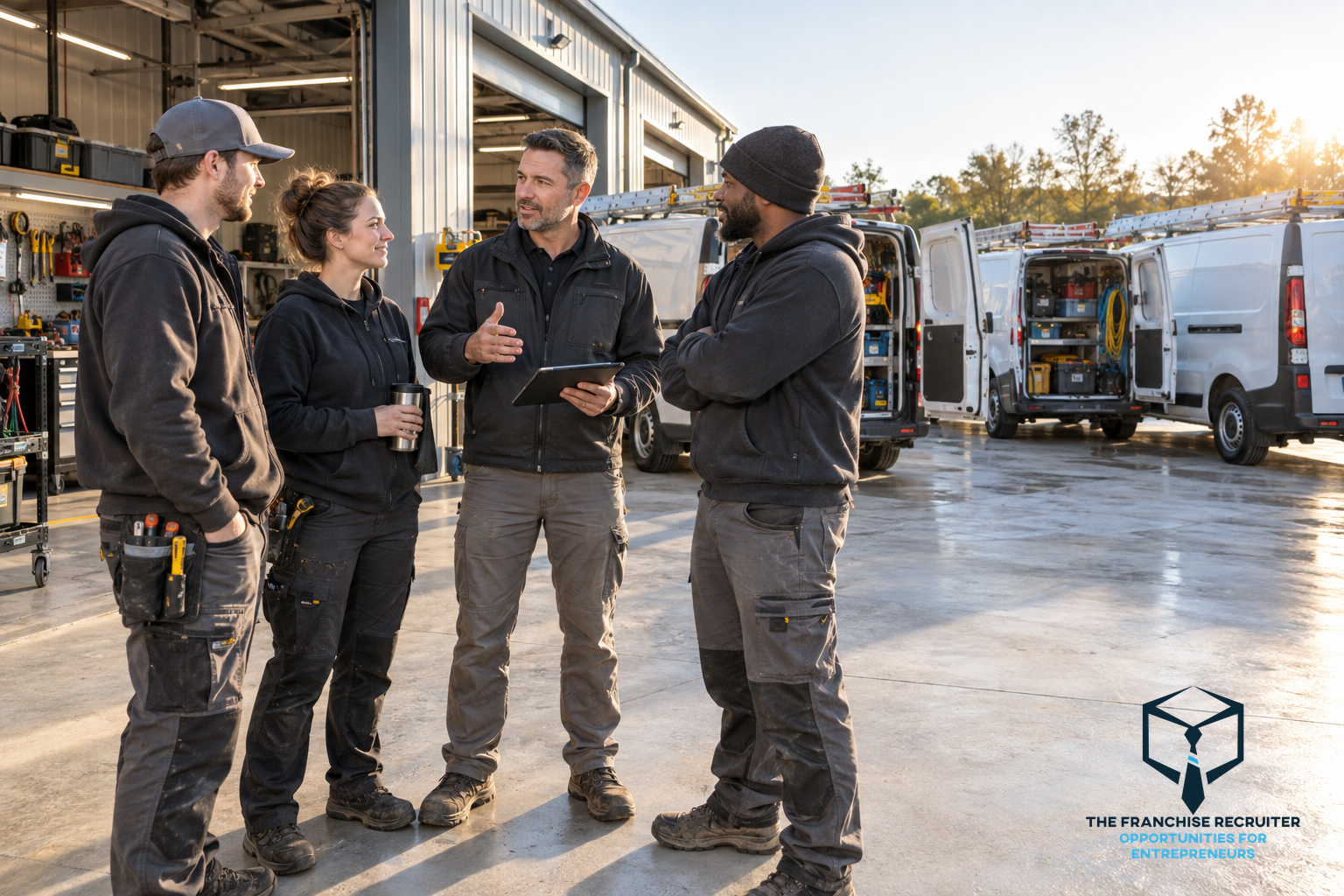
The modern ownership dream is increasingly practical and local
For many aspiring owners, the American dream no longer means a corner office or a speculative app. It means building a durable company that solves visible problems, employs skilled people, serves a local market, and creates an asset that can outlast the founder's individual labor. Skilled-trades businesses fit that vision, but the opportunity should never be confused with a guarantee.
Plumbing, electrical, HVAC, roofing, restoration, maintenance, welding, mechanical service, and other trades can benefit from essential demand and limited geographic competition. They also carry real constraints: licensing, safety, working capital, vehicles, equipment, insurance, seasonal volume, customer acquisition, and a difficult talent market.
Customers can see the value
A skilled-trades company restores something people need: power, water, comfort, safe structures, working equipment, or productive facilities. The outcome is concrete. Customers may debate timing or price, but they generally understand why a dangerous panel, failed water heater, broken cooling system, or leaking pipe requires attention.
That visible value can create a strong foundation for reputation and referral. It does not remove the need for clear estimates, respectful communication, quality work, and dependable follow-up. The best operators make a technical service feel organized and trustworthy.
The labor market supports long-term relevance
The BLS Occupational Outlook Handbook projects faster-than-average growth for construction and extraction occupations from 2025 to 2035 and about 587,000 openings per year on average, largely from growth and replacement needs. That does not mean every local business will grow, but it confirms the continuing economic importance of skilled work.
Technology will change tools, diagnosis, scheduling, estimating, and communication. It is less likely to eliminate the need for accountable people to perform location-specific physical work safely. Owners who combine modern systems with technical standards can improve the customer and employee experience.
The career ladder can lead to ownership
Many trades offer a visible progression from apprentice to technician, lead, estimator, supervisor, manager, and owner. That matters because operating knowledge can accumulate close to the customer. A future owner can learn how jobs are sold, delivered, documented, staffed, and corrected before investing capital.
Workers exploring that path can read Blue Collar Recruits' skilled-trades opportunities with an eye toward training, supervision, and responsibility, not only starting pay. Experience inside a well-run company can become practical business education.
Local markets can reward specialization
A trade business does not need a national audience. It needs enough suitable customers within a service radius, a compelling reason to call, and the capacity to respond. Specialization by equipment, customer type, urgency, property class, or service model can make positioning clearer and operations more repeatable.
For example, Discount Water Heaters demonstrates how a focused home-service category can build around diagnosis, repair, replacement, and local trust. The lesson is not that every owner should copy one niche; it is that a specific promise is often easier to operationalize than a vague list of everything.
Recurring work can improve stability
Maintenance agreements, inspections, commercial contracts, route density, warranty relationships, and repeat customers can make revenue more visible. Recurring revenue is valuable only when pricing covers the real labor and service obligation. A contract that consumes scarce capacity at poor margin can weaken the business.
Owners should measure renewal, utilization, cancellation, labor time, drive time, parts, customer acquisition, and the downstream repair or replacement work created. The label 'membership' does not automatically make the economics attractive.
Small improvements can compound
Trade businesses often contain repeatable operating levers: answer rate, booking rate, dispatch efficiency, average travel time, estimate conversion, gross margin, first-time completion, callback rate, review generation, maintenance renewal, and technician retention. Improving several by a modest amount can materially change cash flow.
That operational visibility is appealing to owners who prefer a measurable business. It also makes weak execution visible. A full calendar can disguise poor pricing, high rework, or slow collections, so activity must be connected to profit and cash.
The work can create community wealth
A healthy local company creates skilled jobs, trains apprentices, buys vehicles and materials, pays local vendors, and keeps critical knowledge in the community. Employees can build portable capabilities and sometimes move into management or ownership themselves.
That story becomes credible only when the employer provides safe work, transparent compensation, real development, and professional leadership. Companies that need help building a consistent talent pipeline can work with The Blue Collar Recruiter rather than treating chronic understaffing as unavoidable.
Ownership offers autonomy, and transfers every responsibility
The appeal of ownership includes control over standards, team, schedule, investment, and direction. The tradeoff is complete accountability. The owner is responsible when payroll is due, a vehicle breaks, a customer is unhappy, a permit is delayed, the phone stops ringing, or a key employee leaves.
Prospective owners should ask whether they want to lead a business or simply escape a job. A business may eventually create flexibility, but the early years often demand more attention, not less. The model must fit the owner's strengths, family needs, capital, and tolerance for uncertainty.
A franchise can shorten the system-building curve
A franchise may provide a brand, playbook, training, suppliers, technology, marketing support, and a network of operators. Those resources can reduce some trial and error. They do not guarantee customers, employees, profit, financing, or a good local fit.
The Franchise Recruiter helps prospective owners compare structured opportunities and the owner roles behind them. Candidates should still read the Franchise Disclosure Document, speak with current and former franchisees, examine agreements, and use independent legal and financial advice.
The model must survive local validation
Map the territory, households or commercial accounts, asset age, climate, competitors, response expectations, licensing, technician availability, wage levels, and customer-acquisition channels. Separate total demand from the share a new operator can realistically win.
Then test unit economics: average ticket, direct labor, materials, royalties where applicable, marketing, vehicles, insurance, rent, software, management, callbacks, bad debt, taxes, debt service, and working capital. A great category can still be a poor investment at the wrong price or leverage.
Talent may be the limiting factor
The sales plan is meaningless if the company cannot deliver the work. Validate the number and type of employees required at each revenue level, the time needed to train them, required licenses, span of supervision, realistic wages, on-call coverage, and how quality will be maintained during growth.
The strongest investment thesis includes a recruiting and development system from day one. It also gives the owner enough working capital to hire and train before the schedule becomes desperate.
Why the dream is real, but must stay grounded
Skilled-trades businesses can create independence, meaningful work, strong careers, and long-term enterprise value. Their appeal comes from usefulness and disciplined execution, not from being easy. The new American dream is not merely owning a company; it is building one that customers trust, employees can grow inside, and the owner can eventually lead without personally rescuing every job.
Frequently asked questions
Are skilled-trades businesses recession-proof?
No business is recession-proof. Essential repairs may be more resilient than discretionary spending, but financing, competition, labor, weather, pricing, and local economic conditions still affect demand.
Do I need trade experience to own one?
Requirements vary. Some models require the owner or a designated person to hold specific licenses. Even when the owner is not the lead technician, the company needs credible technical leadership and compliant supervision.
Should I start independently or buy a franchise?
Compare brand value, systems, fees, territory, support, control, capital, speed, and your own ability to build the operation. Validate both paths with evidence rather than assuming one is universally better.