Why Home Service Franchises Continue to Dominate
Understand home service franchise operational requirements, labor retention strategies, unit economics, capital needs, and essential validation steps before

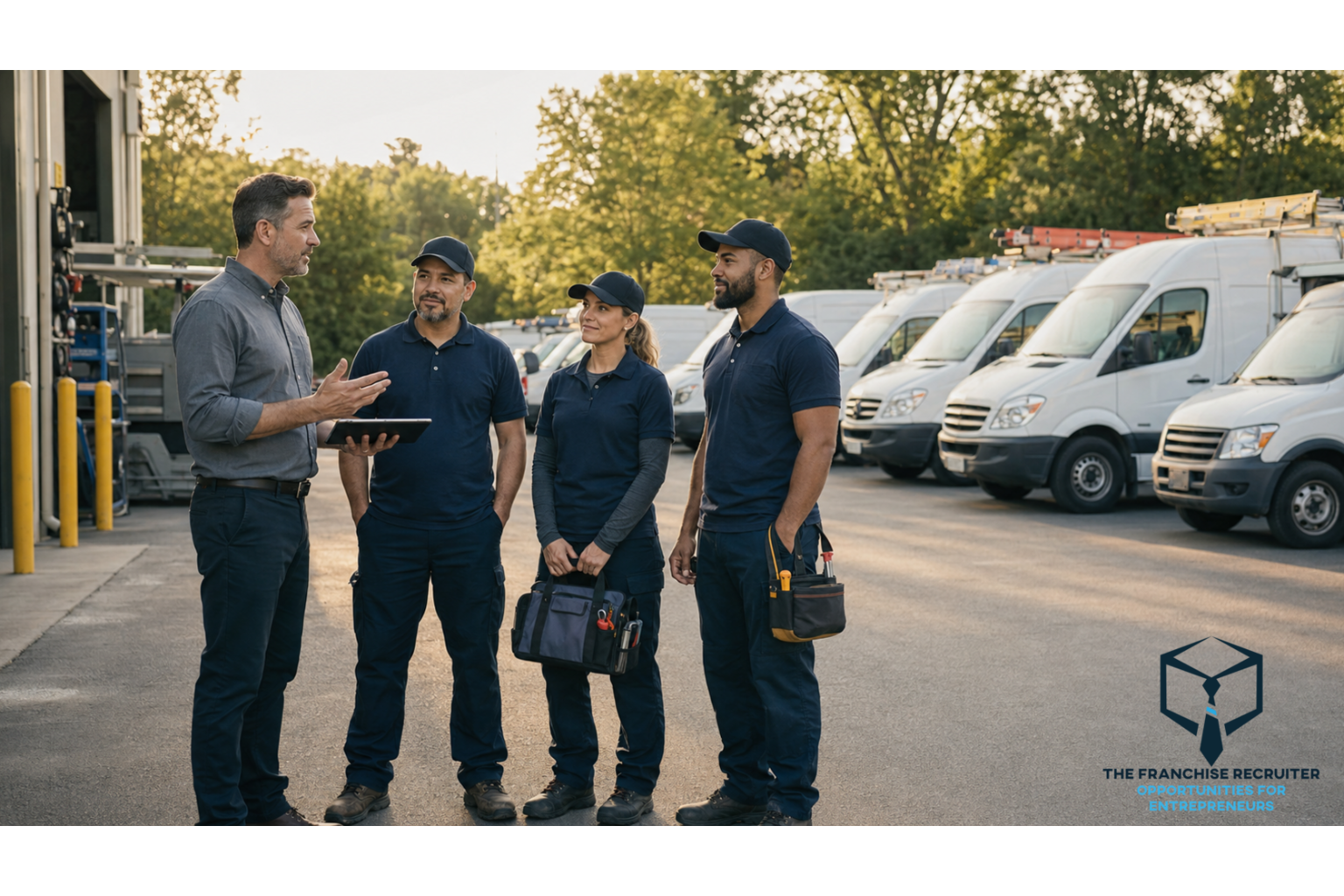
Homes keep creating work that cannot be downloaded or outsourced
Home service franchises continue to attract buyers because the underlying customer need is tangible. Air conditioners fail, water heaters leak, electrical systems need attention, properties require cleaning and maintenance, and homeowners value fast, trustworthy help. The work is local, often urgent, and difficult to move overseas or replace with an app.
That does not make every brand or territory a good investment. Home services can require skilled labor, vehicles, insurance, licensing, inventory, marketing, strong dispatch, and consistent customer care. The category's strength comes from combining durable demand with an operating system - not from avoiding the work of ownership.
Essential and recurring needs support demand
Many home services solve safety, comfort, sanitation, protection, or property-value problems. Customers may delay a cosmetic project, but a failed cooling system in summer or a water heater that is leaking demands attention. Other services recur by design: preventive maintenance, cleaning, lawn care, pest control, pool care, and inspections.
A franchise can organize those needs into a customer journey: initial service, repair options, maintenance, reminders, replacement when justified, and referrals. Recurring relationships can smooth demand, but buyers should validate actual retention, renewal, seasonality, and local customer-acquisition costs rather than assuming every service produces automatic repeat revenue.
The market is local and fragmented
Homeowners often choose among a mix of independent operators, regional companies, and national brands. That fragmentation can give a well-run local franchise room to build recognition through reliable scheduling, professional communication, visible vehicles, reviews, and community presence. A brand supplies a starting platform; the local owner earns the reputation one appointment at a time.
Territory quality matters. Housing age, home values, density, weather, local codes, competition, labor supply, drive time, and customer demographics all affect the economics. Two territories under the same franchise system can produce different results because the field conditions and local execution differ.
A repeatable operating system creates leverage
New owners do not have to invent every call script, price book, scheduling rule, marketing template, software workflow, training standard, and performance dashboard. A mature franchise may provide those systems, along with vendor relationships and peer support. The value appears when the owner actually uses the system and the system works in the territory.
This is where home service franchises can outperform an improvised startup. Consistent intake, dispatch, diagnosis, communication, follow-up, and review management turn technical work into a customer experience. Prospective owners should ask franchisees which tools are genuinely useful, which require local adaptation, and how quickly the franchisor responds when field conditions change.
Technology improves the customer experience without replacing the field team
Online booking, text updates, route optimization, call recording, digital estimates, financing applications, customer relationship systems, and automated reminders can make the business easier to use and manage. Owners gain visibility into conversion, average ticket, capacity, callbacks, and marketing sources.
Technology is not the service. A homeowner still judges whether the phone was answered, the technician arrived prepared, the explanation was honest, the home was protected, and the work solved the problem. The strongest systems use data to support accountable people.
Home services can expand through teams and adjacent revenue
Many concepts begin with one owner, a small field team, and a defined territory, then add vehicles, technicians, dispatch capacity, sales support, or neighboring service lines. Growth can come from more completed appointments, better conversion, repeat customers, maintenance plans, additional crews, or another territory - depending on the franchise agreement.
Scalability depends on management depth. Adding vans without recruiting, onboarding, quality control, scheduling, and cash planning can amplify problems. Owners evaluating skilled-trades concepts should include The Blue Collar Recruiter's hiring system in the model before growth creates an emergency.
The labor challenge is real - and it can become a competitive advantage
HVAC, plumbing, electrical, restoration, roofing, and other technical services compete for capable workers. Recruiting cannot wait until a schedule is overbooked. The employment offer must address pay, dispatch, on-call expectations, tools, vehicles, training, leadership, and the quality of work technicians are asked to perform.
Owners can study what qualified trades applicants want and build retention into the plan. A company known for strong leadership and honest customer service may recruit more effectively than one trying to solve every vacancy with a signing bonus. For a benchmark on what these roles actually pay, see the 15 highest-paying skilled trades in 2026.
Real home-service businesses illustrate the local model
Local operators such as One Hour Air Conditioning & Heating of the Treasure Coast show how a national service platform becomes a community-facing HVAC business. Specialized providers such as Discount Water Heaters demonstrate the value of a focused service category. These links are examples of the wider ecosystem, not an investment recommendation.
For a prospective owner, the lesson is to examine the actual customer promise and field execution. Does the model make it easier to answer quickly, diagnose correctly, price consistently, communicate clearly, and stand behind the work? Brand recognition matters, but operational credibility produces reviews and referrals.
Why the category can be resilient but not recession-proof
Urgent repairs and essential maintenance may hold up better than discretionary renovations when households reduce spending. Even so, customers can defer replacement, choose smaller repairs, seek financing, or compare more bids. Housing activity, interest rates, insurance costs, weather, and local employment can all influence demand.
Build conservative scenarios. Ask how existing franchisees performed in weaker periods, how much revenue was emergency versus discretionary, how gross margins changed, and which costs could adjust. Resilience is a matter of degree, not a guarantee.
Due diligence matters more than category excitement
The Federal Trade Commission's guide to buying a franchise explains the importance of reviewing the Franchise Disclosure Document, investigating the opportunity, and speaking with franchisees. Use qualified legal, accounting, lending, and insurance advisers. Confirm licenses, territory protections, fees, required purchases, startup timing, working capital, and transfer or exit terms.
Ask current and former owners about leads, staffing, training, field support, technology, required marketing, vendor pricing, seasonality, and the daily owner role. Compare their answers with the sales presentation. A strong category cannot rescue a weak unit model, undercapitalized launch, or poor owner fit.
Who fits a home service franchise?
The owner does not always need to be the licensed technician, but the business must meet every applicable licensing and supervision requirement. Strong fits often bring leadership, sales, operations, customer service, financial discipline, and the willingness to follow a system. They are comfortable being accountable for people and local reputation.
If you expect the business to run without active oversight from the beginning, review semi-absentee franchise ownership realities. A manager-run model still needs capital, hiring, controls, and engaged ownership.
The category wins when the fundamentals work
Home service franchises combine persistent local needs, a fragmented market, visible customer outcomes, and systems that can support team growth. Those advantages explain the category's appeal. The actual investment succeeds only when the territory, unit economics, labor plan, franchisor support, owner role, and capital all fit.
The Franchise Recruiter can help prospective owners compare concepts and test that fit before emotion turns interest into a commitment.
Frequently asked questions
Are home service franchises recession-proof?
No business is recession-proof. Essential repairs may be more durable than discretionary projects, but customers, pricing, financing, and local demand can still change.
Do I need trade experience?
Not always, but someone must meet licensing and technical requirements. Owners without trade experience need credible field leadership, strong training, and respect for the technical work.
What is the biggest operational risk?
For many concepts, it is building and retaining the field team while maintaining service quality. Working capital, lead flow, and owner execution are also critical.
What should I validate first?
Start with the daily owner role, total capital requirement, local demand, labor availability, unit economics, and conversations with a broad group of current and former franchisees.